Career Advancement
With our advanced curriculum that focuses on professional and personal growth, students are better prepared to compete and advance their careers.




Autumn
(May - Oct)
/ Semester 1
Module: AC4052NI
Credits: 15
Develops double-entry bookkeeping and the preparation and interpretation of financial statements for sole traders and limited companies.
Module: AC4054NI
Credits: 15
Introduces computerised accounting information systems, data flows, accounting software, system controls and digital decision support.
Module: AC4056NI
Credits: 15
Covers the legal system, contract, tort and commercial law, together with ethical principles relevant to business and finance.
Module: FE4051NI
Credits: 15
Explores the structure, functions, participants and interconnectedness of financial markets, institutions and financial instruments.

Spring
(Nov - Feb)
/ Semester 2
Module: AC4053NI
Credits: 15
Introduces costing, budgeting, management accounting techniques and data-driven tools for internal planning and decision-making.
Module: AC4055NI
Credits: 15
Builds foundational skills in data science, statistics, research, software-based analysis and evidence-based business decision-making.
Module: MN4W50NI
Credits: 15
Develops professional practice, employability, self-management, communication, reflection and workplace-focused skills.
Module: FE4055NI
Credits: 15
Examines microeconomic, macroeconomic, internal and external influences on organisations and develops business-environment analysis skills.
Autumn
(May - Oct)
| Semester 1
Module: AC5064NI
Credits: 15
Develops knowledge of personal taxation, income tax computations, rental income, taxpayer obligations and basic tax planning.
Module: AC5072NI
Credits: 15
Applies cost and management accounting, decision-making under uncertainty and financial and non-financial performance measurement.
Module: BL5055NI
Credits: 15
Covers partnerships, company formation, directors, shareholders, creditors, auditors, insolvency and links with employment law.
Module: MN5W50NI
Credits: 15
Uses Lean Business Model and Business Model Canvas approaches to evaluate SME ideas, client briefs and entrepreneurial opportunities.
Spring
(Nov - Feb)
| Semester 2
Module: AC5062NI
Credits: 15
Develops understanding of financial reporting regulation, IFRS, preparation of company financial statements and ratio-based interpretation.
Module: AC5063NI
Credits: 15
Covers risk and return, valuation, capital budgeting, market efficiency and the use of Excel and financial models in decision-making.
Module: FE5056NI
Credits: 15
Develops problem formulation, qualitative and quantitative research methods, data analysis and interpretation using relevant software.
Module: AC5065NI
Credits: 15
Covers corporation tax, capital allowances, capital gains, VAT, inheritance tax and basic tax planning for businesses.
Autumn
(May - Oct)
| Semester 1
Module: FE6P04ANI
Credits: 15
Develops the research problem, critical literature review, theoretical framing, methodology, ethics and research proposal for the dissertation.
Module: AC6064NI
Credits: 15
Applies advanced IFRS to complex transactions, group accounts and contemporary reporting issues, with critical financial statement analysis.
Module: AC6065NI
Credits: 15
Covers corporate finance theory, valuation, investment appraisal, capital structure, M&A, payout, risk and working-capital decisions.
Module: FE6055NI
Credits: 15
Applies econometric and statistical models using real-world data, EViews and Python, including introductory machine-learning techniques.
Spring
(Nov - Feb)
| Semester 2
Module: FE6P04SNI
Credits: 15
Focuses on data collection and analysis, interpretation of findings, conclusions, recommendations and professional academic communication.
Module: AC6070NI
Credits: 15
Develops advanced financial accounting through regulatory frameworks, IFRS-based company accounts and critical assessment of company performance.
Module: FE6060NI
Credits: 15
Develops skills in derivatives, structured products, hedging, risk-return analysis, value at risk and quantitative financial decision-making.
Module: AC6068NI
Credits: 15
Covers audit and assurance, governance, ethics, audit risk, internal controls, evidence, international standards and data analytics.
The course has been designed with reference to the subject benchmark statement for Accounting (2019) developed by the Quality Assurance Agency for Higher Education.
It aims to deliver a programme with a major focus on accounting and finance and its relatability to the business environment. The course includes conceptual foundations for a professional or managerial career by helping you analyse current problems in accounting and finance in a rapidly changing business environment.
* London Metropolitan University authorises and approves Islington College to deliver and assess part or all of the course. This course is also taught and assessed at London Metropolitan University’s main campus in London, United Kingdom. London Metropolitan University holds direct responsibility for quality assurance, curriculum content, and the teaching, learning and assessment strategy.
NEB +2 overall aggregate of 2.2 CGPA (55%) or above with each subject (theory and practical) grade D or above, and SEE Mathematics score of C+ (55%) or above
For A-Levels, a minimum of 3 credits and at least a grade of D and above
English NEB XII Marks > 60% or 2.4 GPA
Applicants not meeting the aforementioned criteria for English can demonstrate their English proficiency with the following internationally recognised English Tests:
Pass in General Paper or English Language or IELTS 6 or PTE 57.
With our advanced curriculum that focuses on professional and personal growth, students are better prepared to compete and advance their careers.
With our expansive alumni network, international degree, and valuable experience, students can stay competitive and pursue opportunities with leading employers worldwide.
With our partnership with London Metropolitan University and our teaching methods, students stand a higher chance of securing better job opportunities.

Islington Holi is an unforgettable experience, filled with colour, music, and most importantly, camaraderie.

Setting the mood with the customary Christmas garnishing, the students and staff both engage in the moment

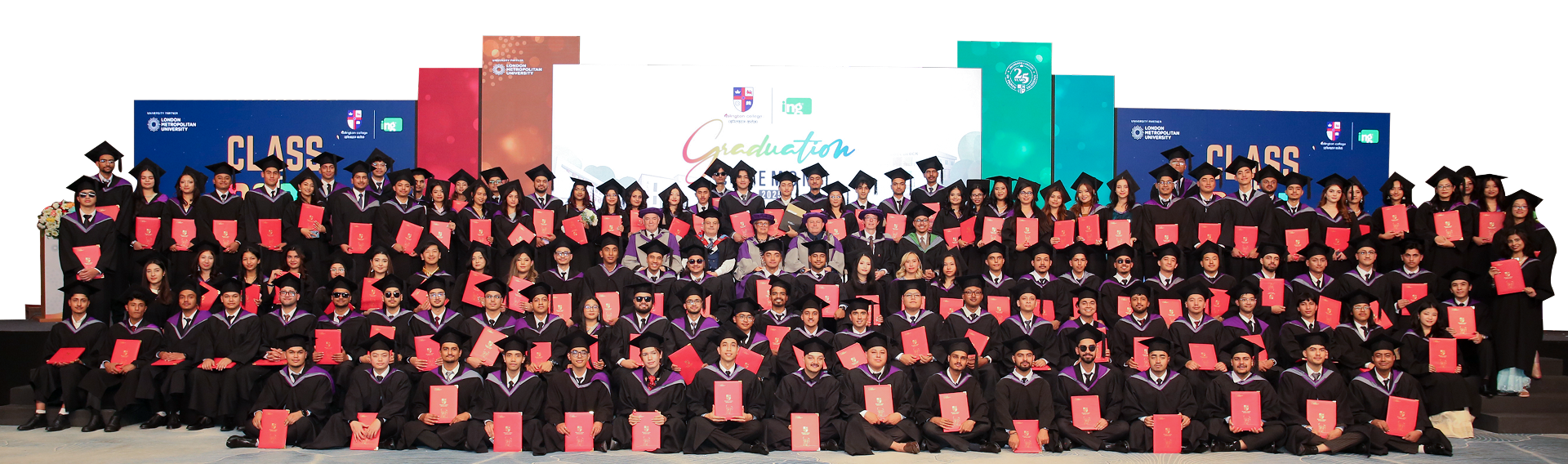
A proud celebration marking the academic journey and achievements of our graduates, as they step into the next chapter of their lives with hope and honor

Islington Hackathon is a tech marathon where bright minds team up to solve real-world problems.

Dashain Mela at Islington College celebrates Nepal’s biggest festival with traditional games, food stalls, music, and cultural performances
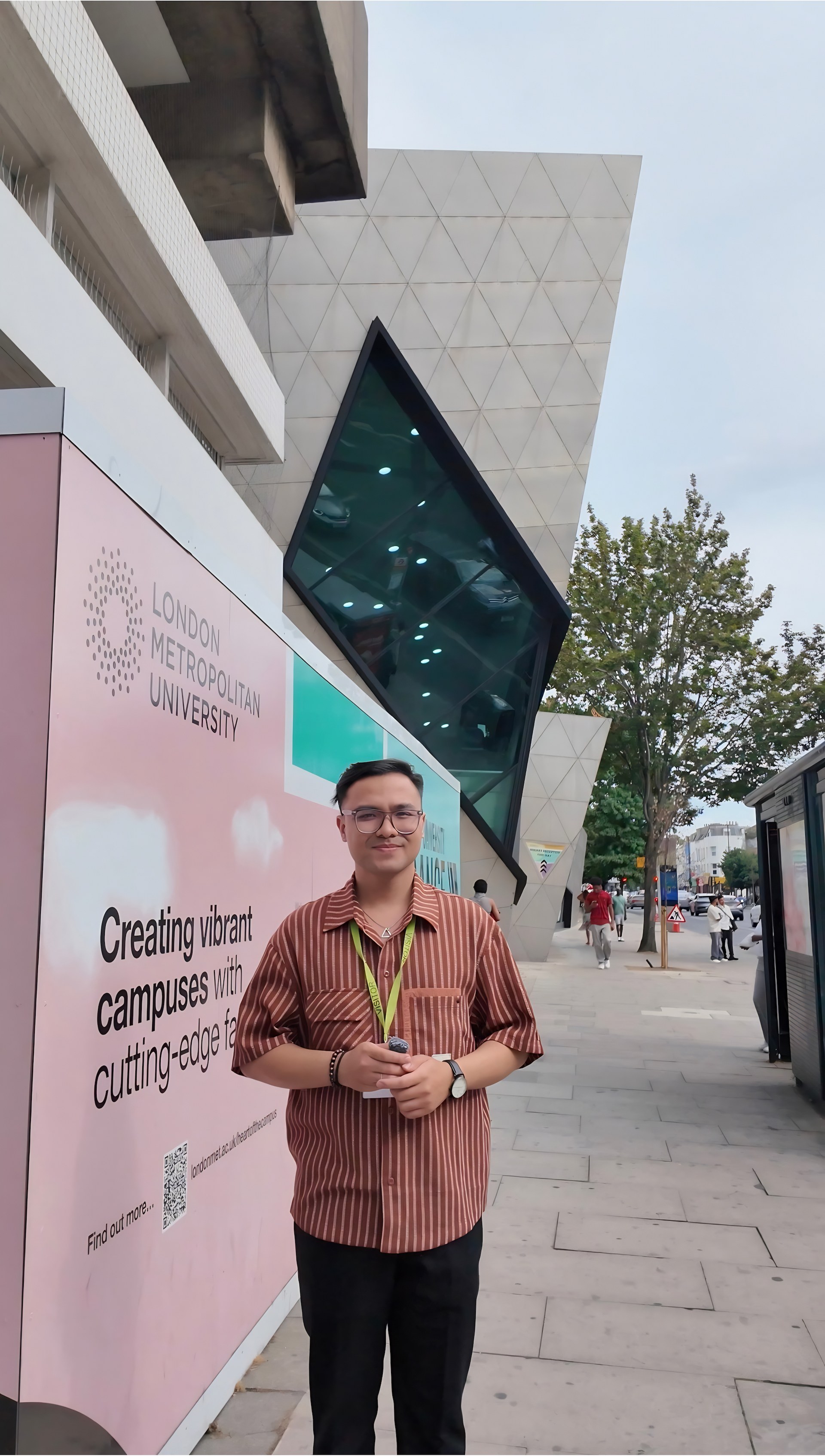

"Being selected as one of only two fully funded recipients after three interview rounds made this once-in-a-lifetime experience truly special. The workshops at London Metropolitan University delivered practical business insights, while exploring London and Torquay broadened my cultural understanding. I returned with greater confidence, broader horizons, and lasting memories. I am deeply grateful to Islington College and London Metropolitan University for this incredible opportunity. "
Prasen Man Shrestha BA(Hons) Business Administration
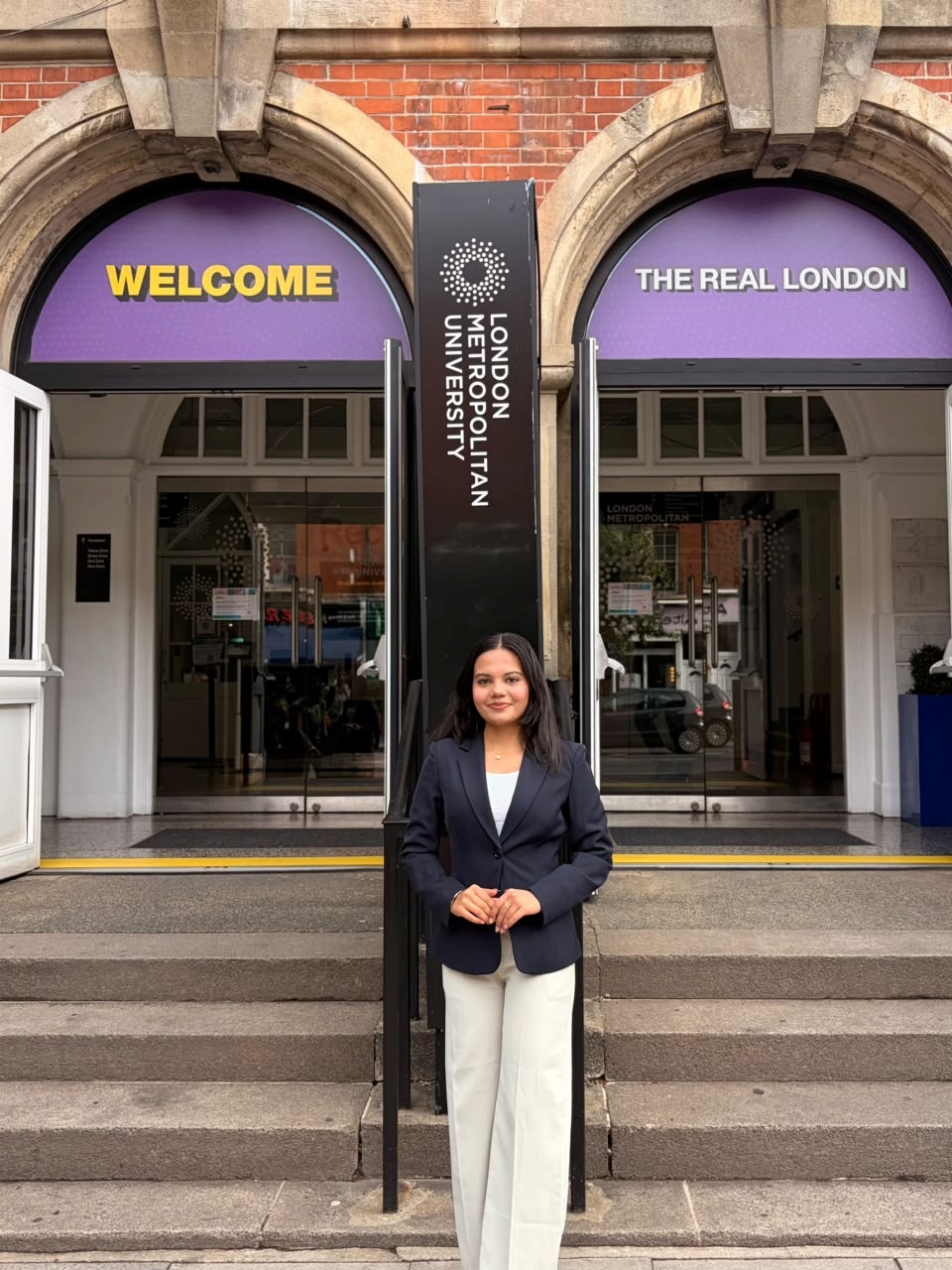
"Ten days of discoveries took our learning beyond boundaries. Exploring LMU, visiting new cities, and navigating the Underground made every moment an adventure. From the vibrant energy of London to the serene coast of Torquay, it was a transformative journey of personal growth, culture, and lifelong friendships. We returned with unforgettable memories and a little piece of London in our hearts. "
Niharika Poudel BSc (Hons) Computing
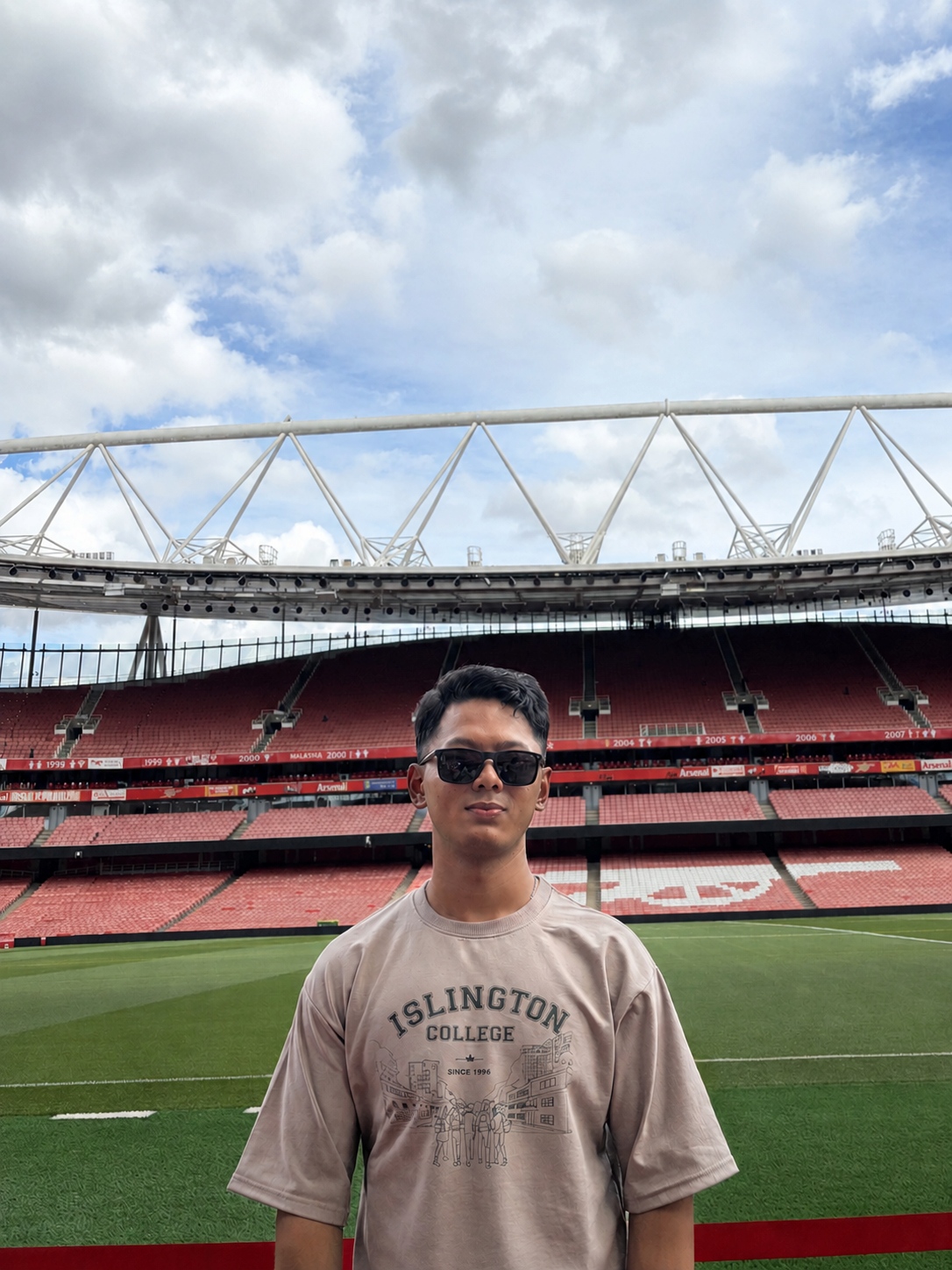
"Participating in the Real London Experience 2026 was truly unforgettable. From classes at London Metropolitan University and exploring London to Torquay’s beaches, every moment offered something new. The late-night chats, shared meals, and new friendships made it extra special. I returned home with fresh perspectives, greater confidence, and lasting memories. I am deeply grateful to Islington College and London Metropolitan University for this cherished opportunity. "
Niraj Gurung BSc (Hons) Computing

"The Real London Experience was such a great experience and I’m really glad I got to be part of it. We got to explore London, visit our home university and spend some amazing time together. One of my favourite parts was visiting Torquay, which was such a lovely experience and a nice change of scenery. It was a great mix of exploring new places, learning outside the classroom and making memories with everyone. I’m really thankful to Islington College for giving us the opportunity to experience all of this. "
Karmistha Sthapit BSc (Hons) Computing

"The Real London Experience was one of my life’s most memorable journeys. Hands-on sessions at London Metropolitan University, exploring iconic landmarks, riding the Tube, eating fish and chips, and visiting Arsenal's stadium were incredible highlights. In Torquay, the ferry ride and English Channel views were unforgettable. Above all, the laughter and shared moments made this a once-in-a-lifetime adventure. "
Nischal Paudel MBA with Specialisation in Advertisement and Marketing

"Being selected for the Real London Experience 2026 was a true honour. Experiencing international education at London Metropolitan University and seeing iconic sites like Tower Bridge and Buckingham Palace in person was deeply inspiring. London’s vibrant culture and energy exceeded all my expectations. I returned with renewed motivation and broader horizons, and I encourage every student to aim for this life-changing opportunity. "
Pranav Sharma BSc (Hons) Computing with Artificial Intelligence