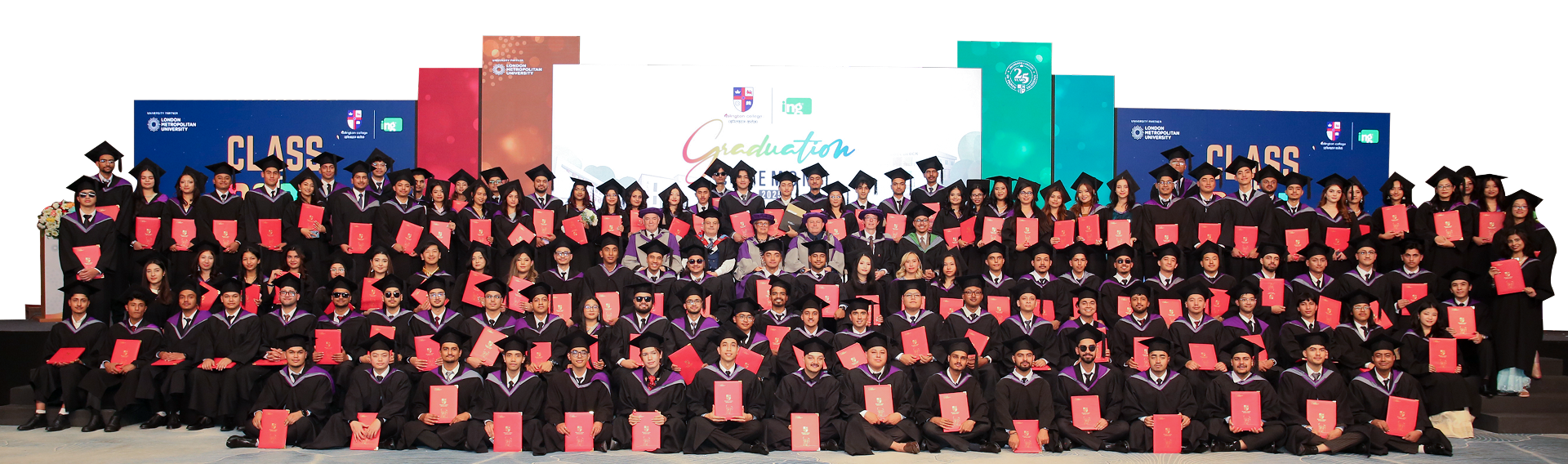
Career Advancement
With our advanced curriculum that focuses on professional and personal growth, students are better prepared to compete and advance their careers.



Autumn
(May - Oct)
/ Semester 1
Module: CS4001
Credits: 30
Year Long
This is an introductory programming module, designed to develop interest, ability and confidence in using a programming language. Students will gain the basic knowledge and experience to solve simple programming problems using established techniques in program design, development and documentation. It is expected that on completion of this module, students will be able to design, implement and test object-oriented programs. The student is also expected to develop their confidence needed to program solutions to problems through a series of practical programming exercises.
Module: CC4057
Credits: 15
This module introduces students to business environments, information systems, and the role of ICT in organisations. It covers information management, software development, databases, web and application technologies, system security, UI/UX, and organisational decision-making. Students also develop practical, academic, and communication skills while gaining awareness of legal, social, ethical, and professional issues in information systems.
Module: CC4003
Credits: 30
Year Long
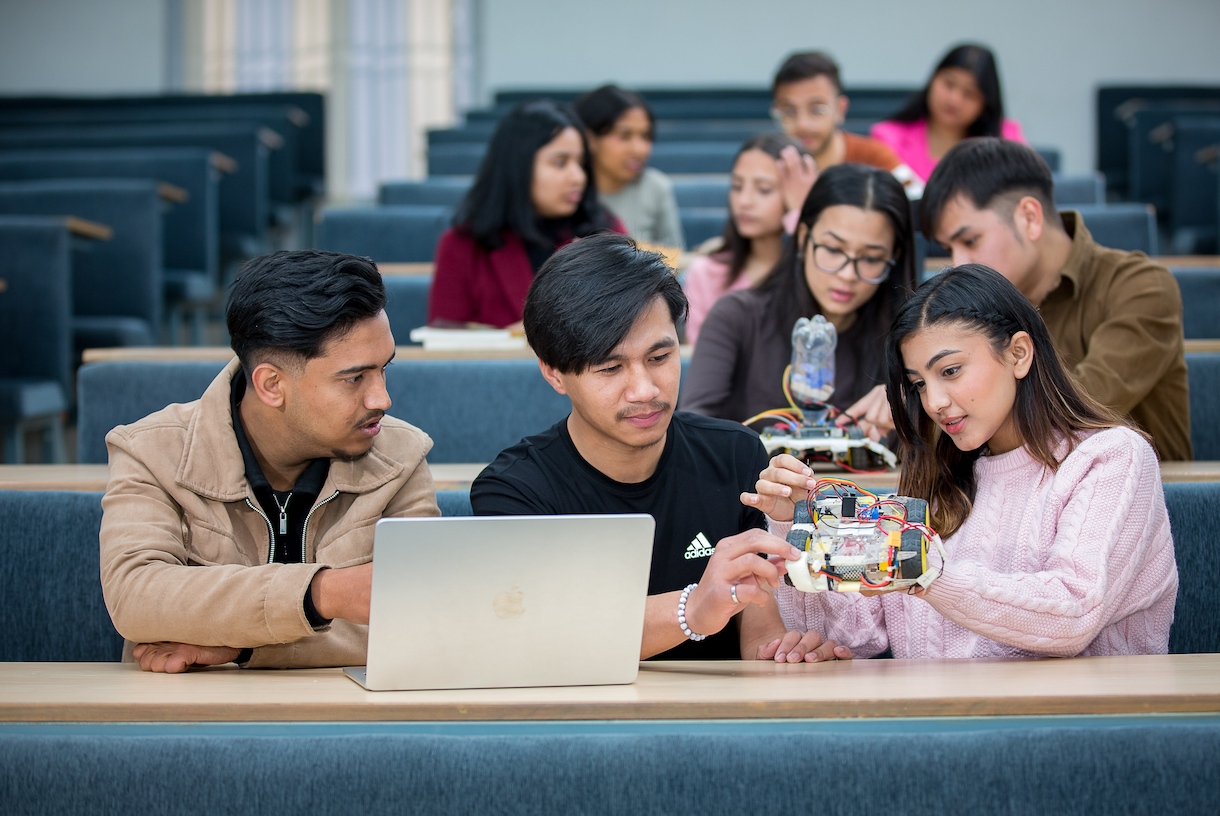
This module aims to introduce basic hardware and software elements relevant to robotics and internet of things (IoT) at diploma level (level 4). In particular, the module is designed to provide students with an introductory overview and practical experience in design and development of a simple system involving elements of robotics and IoT. Students will be able to understand how electronic devices like microcontrollers, sensors work along with their functionality. The module covers the necessary principles and theory through formal lectures/seminars followed by comprehensive laboratory practice involving workshop-based exercises and a case study.
Module: MA4010
Credits: 30
Year Long
The module covers basic mathematical techniques of differential and integral calculus and of linear algebra that will be of later use throughout Mathematics and related degree courses. The module builds on and extends concepts learned in A-Level Mathematics. The contents covered and the skills developed are fundamental to the development of mathematical competence. Calculus and linear algebra form an important foundation for further studies in Mathematics, Finance, Statistics and Engineering.

Spring
(Nov - Feb)
/ Semester 2
Module: CS4051
Credits: 15
Students will receive an introduction to the principles of information processing and an overview of the information technologies for digital data processing using computational and communication devices, including an initial understanding of the requirements for usability, quality, complexity, security and privacy of the developed solution. The students will obtain initial practical skills in modelling, design, implementation, and testing of software systems for real-world application using a suitable programming language.
Module: CS4001
Credits: 30
continuation of sem 1
This is an introductory programming module, designed to develop interest, ability and confidence in using a programming language. Students will gain the basic knowledge and experience to solve simple programming problems using established techniques in program design, development and documentation. It is expected that on completion of this module, students will be able to design, implement and test object-oriented programs. The student is also expected to develop their confidence needed to program solutions to problems through a series of practical programming exercises.
Module: CC4003
Credits: 30
continuation of sem 1
This module aims to introduce basic hardware and software elements relevant to robotics and internet of things (IoT) at diploma level (level 4). In particular, the module is designed to provide students with an introductory overview and practical experience in design and development of a simple system involving elements of robotics and IoT. Students will be able to understand how electronic devices like microcontrollers, sensors work along with their functionality. The module covers the necessary principles and theory through formal lectures/seminars followed by comprehensive laboratory practice involving workshop-based exercises and a case study.
Module: MA4010
Credits: 30
continuation of sem 1
The module covers basic mathematical techniques of differential and integral calculus and of linear algebra that will be of later use throughout Mathematics and related degree courses. The module builds on and extends concepts learned in A-Level Mathematics. The contents covered and the skills developed are fundamental to the development of mathematical competence. Calculus and linear algebra form an important foundation for further studies in Mathematics, Finance, Statistics and Engineering.
Autumn
(May - Oct)
/ Semester 1
Module: CS5003
Credits: 30
Year Long
This module further develops students’ knowledge and skills in developing software applications for solving problems. It focuses on the data structures and algorithms in programming and the software technologies for building standalone, networked and Internet applications. The module is designed to enhance employability with modern industrial tools and technologies, and familiarisation with the software development life cycle.
Module: CS5002
Credits: 30
Year Long
This module provides a systematic approach to the analysis, design, construction, testing, deployment and maintenance of software. The module also broadens the student’s knowledge of methods, techniques and tools used in software engineering and systems development.
Module: CC5051
Credits: 15
The module will enable students to introduce the issues governing the design and implementation of database systems. Theoretical aspects of designing sound database systems, as well as the practical aspects of implementing such systems are presented. This therefore allows students to understand, and put into practice, the techniques available for analysing, designing and developing database systems.
Module: MA5054
Credits: 15
The module extends the students’ knowledge of the techniques of calculus and introduces the concept of multivariable Calculus as well as calculus of vectors. This module introduces Vector-Valued Functions and extends ideas of calculus of one dimension to Vector-Valued Functions.
Spring
(Nov - Feb)
/ Semester 2
Module: MA5053
Credits: 15
This module develops the mathematical and statistical tools that are used in the mathematics of finance. It also introduces methods of analysing data using appropriate statistical software. This module introduces the basic terminologies used in finance and develops the mathematical techniques to solve problems in finance. Descriptive statistics and statistical techniques that are useful to present, analyse and make inferences about data are also introduced. A selection of suitable software (e.g. Excel, R, SPSS) will enable students to analyse data to make informed decisions.
Module: CC5061
Credits: 15
This module will enable students to understand the fundamental concepts of data science and appreciate key techniques of data science and its applications in a wide range of business context. Students will be exposed to data understanding, preparation, modelling, results evaluation and data visualisation techniques that can assist businesses in making effective data-driven decisions to improve productivity and consumer satisfaction. Students will be introduced to the practical application of tools and techniques required to perform data science projects in a modern business environment.
Module: CS5003
Credits: 30
continuation of sem 1
This module further develops students’ knowledge and skills in developing software applications for solving problems. It focuses on the data structures and algorithms in programming and the software technologies for building standalone, networked and Internet applications. The module is designed to enhance employability with modern industrial tools and technologies, and familiarisation with the software development life cycle.
Module: CS5002
Credits: 30
continuation of sem 1
This module provides a systematic approach to the analysis, design, construction, testing, deployment and maintenance of software. The module also broadens the student’s knowledge of methods, techniques and tools used in software engineering and systems development.
Autumn
(May - Oct)
/ Semester 1
Module: CU6051
Credits: 15
This module introduces the field of Artificial Intelligence, from its historical context to its current state. Students will research an aspect of AI and work in teams to design an intelligent system and develop a simple prototype.
Module: CS6P05
Credits: 30
Year Long
The module enables students to demonstrate their acquired knowledge and skills through a systematic and creative investigation of a project work in accordance with their course requirements. The topic of investigation will cover a broad spectrum of various analysis and techniques and will lead to a comprehensive and concise academic/industry-related report. Students will be assisted in exploring areas that may be unfamiliar to them and encouraged to develop innovative ideas and techniques. Students will be able to choose a project that may require the solution to a specific problem, creation of an artefact in a real-world environment or an investigation of innovative ideas and techniques related to an area within their field of study. Collaboration with outside agencies and projects with industrial, business or research partners/ sponsors will be encouraged.
Module: CT6008
Credits: 30
Year Long
The module aims to strengthen students’ skills in data technologies ranging from database and data warehousing to Big Data. First, it will provide students with a good understanding of database concepts and database management systems in reference to modern enterprise-level database development. Once gaining good skills in database development, students will be able to study and gain an in-depth understanding of data warehousing which include concepts and analytical foundations as well as data warehousing development. Through intensive hands-on sessions, the students will be able to get familiar with related technological trends and development in the field. The module introduces also the foundation of Big data management based on Apache Hadoop platform and provides students with a broad introduction to Big Data technologies.
Module: CC6057
Credits: 15
This module provides a comprehensive overview of the methods for machine learning and data analytics suitable for use in the data analysis and Big Data Analytics. It also provides practical skills for working with various tools for data analysis and Big Data Analytics inside and outside the platform such as Python, R, Spark, etc. The knowledge and skills obtained can be used in many tasks where the data analysis is of crucial importance for the competitiveness and the effectiveness of the businesses – customer profiling, product recommendations, market trends analysis, cybersecurity, etc. Some basic programming skills using languages for numerical processing such as Python or R or other relevant languages can be an advantage.
Spring
(Nov - Feb)
/ Semester 2
Module: CT6057
Credits: 15
The module aims to prepare students in analysing, designing and developing image processing algorithms routinely used in commercial computer vision systems (e.g. Robots). This module covers fundamental principles, underlying mathematics, algorithmic implementations and practical configurations of computer vision systems. After successful completion of this module, students are expected to professionally evaluate elements of computer vision systems and work with real-world computer vision systems.
Module: CS6W50
Credits: 15
The module enables students to undertake an appropriate, short professional activity related to their course at level 6 with a business or community organisation and to gain credit for their achievements. The activity can be an employment through internal or external work-based placements, research-related activities, business start-up projects, entrepreneurship programs and more.
Module: CS6P05
Credits: 30
continuation of sem 1
The module enables students to demonstrate their acquired knowledge and skills through a systematic and creative investigation of a project work in accordance with their course requirements. The topic of investigation will cover a broad spectrum of various analysis and techniques and will lead to a comprehensive and concise academic/industry-related report. Students will be assisted in exploring areas that may be unfamiliar to them and encouraged to develop innovative ideas and techniques. Students will be able to choose a project that may require the solution to a specific problem, creation of an artefact in a real-world environment or an investigation of innovative ideas and techniques related to an area within their field of study. Collaboration with outside agencies and projects with industrial, business or research partners/ sponsors will be encouraged.
Module: CT6008
Credits: 30
continuation of sem 1
The module aims to strengthen students’ skills in data technologies ranging from database and data warehousing to Big Data. First, it will provide students with a good understanding of database concepts and database management systems in reference to modern enterprise-level database development. Once gaining good skills in database development, students will be able to study and gain an in-depth understanding of data warehousing which include concepts and analytical foundations as well as data warehousing development. Through intensive hands-on sessions, the students will be able to get familiar with related technological trends and development in the field. The module introduces also the foundation of Big data management based on Apache Hadoop platform and provides students with a broad introduction to Big Data technologies.
The course gives an understanding of how inputs such as language, vision, and huge amounts of data can be used for decision-making. You will begin with courses in computer programming, mathematics, and an introduction to the fields of robotics and artificial intelligence along with topics on neural networks and computer vision, machine learning, and natural language processing.
* The full course has been developed and delivered by Islington College and has been evaluated and deemed by London Metropolitan University to be of an equivalent standard and quality to that of its own provision, and therefore suitable to lead to one of its own awards.
NEB +2 overall aggregate of 2.2 CGPA (55%) or above with each subject (theory and practical) grade D or above, and SEE Mathematics score of C+ (55%) or above
For A-Levels, a minimum of 3 credits and at least a grade of D and above
English NEB XII Marks > 60% or 2.4 GPA
Applicants not meeting the aforementioned criteria for english can demonstrate their English proficiency with the following internationally recognised English Tests:
Pass in General Paper or English Language or IELTS 6 or PTE 57.
With our advanced curriculum that focuses on professional and personal growth, students are better prepared to compete and advance their careers.
With our expansive alumni network, international degree, and valuable experience, students can stay competitive and pursue opportunities with leading employers worldwide.
With our partnership with London Metropolitan University and our teaching methods, students stand a higher chance of securing better job opportunities.

Islington Holi is an unforgettable experience, filled with colour, music, and most importantly, camaraderie.

Setting the mood with the customary Christmas garnishing, the students and staff both engage in the moment

A proud celebration marking the academic journey and achievements of our graduates, as they step into the next chapter of their lives with hope and honor

Islington Hackathon is a tech marathon where bright minds team up to solve real-world problems.

Dashain Mela at Islington College celebrates Nepal’s biggest festival with traditional games, food stalls, music, and cultural performances
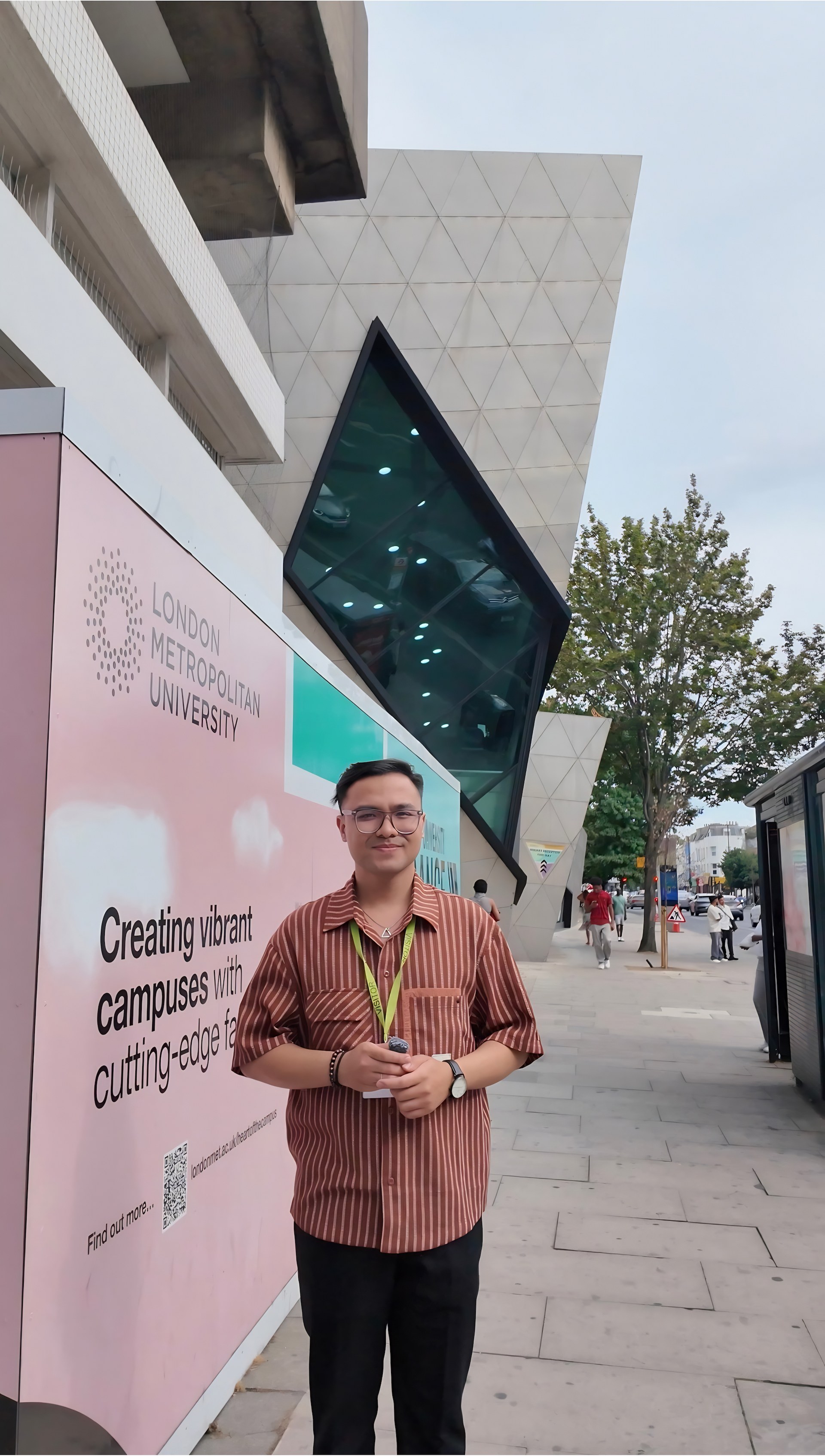

"Being selected as one of only two fully funded recipients after three interview rounds made this once-in-a-lifetime experience truly special. The workshops at London Metropolitan University delivered practical business insights, while exploring London and Torquay broadened my cultural understanding. I returned with greater confidence, broader horizons, and lasting memories. I am deeply grateful to Islington College and London Metropolitan University for this incredible opportunity. "
Prasen Man Shrestha BA(Hons) Business Administration
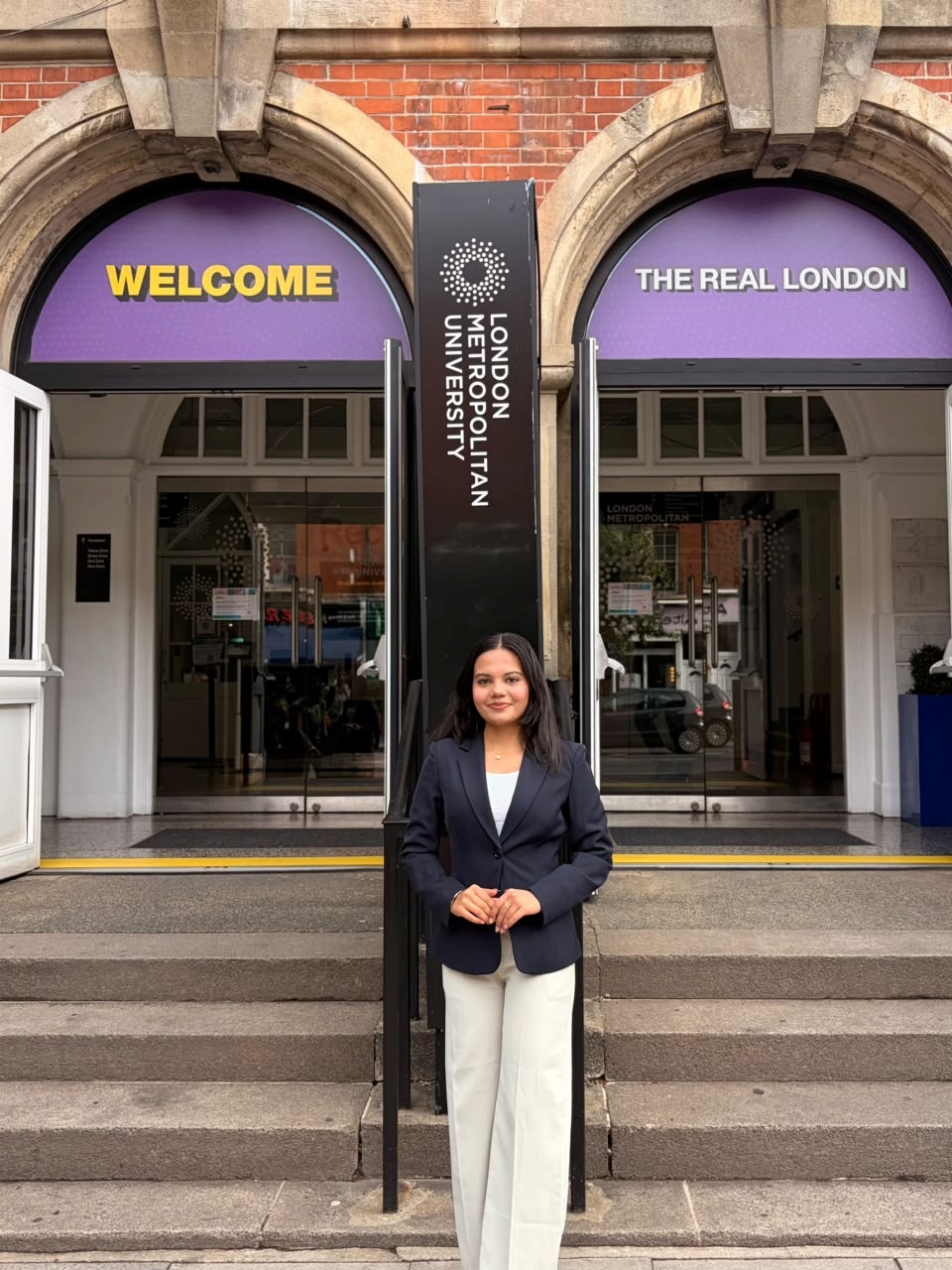
"Ten days of discoveries took our learning beyond boundaries. Exploring LMU, visiting new cities, and navigating the Underground made every moment an adventure. From the vibrant energy of London to the serene coast of Torquay, it was a transformative journey of personal growth, culture, and lifelong friendships. We returned with unforgettable memories and a little piece of London in our hearts. "
Niharika Poudel BSc (Hons) Computing

"Participating in the Real London Experience 2026 was truly unforgettable. From classes at London Metropolitan University and exploring London to Torquay’s beaches, every moment offered something new. The late-night chats, shared meals, and new friendships made it extra special. I returned home with fresh perspectives, greater confidence, and lasting memories. I am deeply grateful to Islington College and London Metropolitan University for this cherished opportunity. "
Niraj Gurung BSc (Hons) Computing

"The Real London Experience was such a great experience and I’m really glad I got to be part of it. We got to explore London, visit our home university and spend some amazing time together. One of my favourite parts was visiting Torquay, which was such a lovely experience and a nice change of scenery. It was a great mix of exploring new places, learning outside the classroom and making memories with everyone. I’m really thankful to Islington College for giving us the opportunity to experience all of this. "
Karmistha Sthapit BSc (Hons) Computing

"The Real London Experience was one of my life’s most memorable journeys. Hands-on sessions at London Metropolitan University, exploring iconic landmarks, riding the Tube, eating fish and chips, and visiting Arsenal's stadium were incredible highlights. In Torquay, the ferry ride and English Channel views were unforgettable. Above all, the laughter and shared moments made this a once-in-a-lifetime adventure. "
Nischal Paudel MBA with Specialisation in Advertisement and Marketing

"Being selected for the Real London Experience 2026 was a true honour. Experiencing international education at London Metropolitan University and seeing iconic sites like Tower Bridge and Buckingham Palace in person was deeply inspiring. London’s vibrant culture and energy exceeded all my expectations. I returned with renewed motivation and broader horizons, and I encourage every student to aim for this life-changing opportunity. "
Pranav Sharma BSc (Hons) Computing with Artificial Intelligence