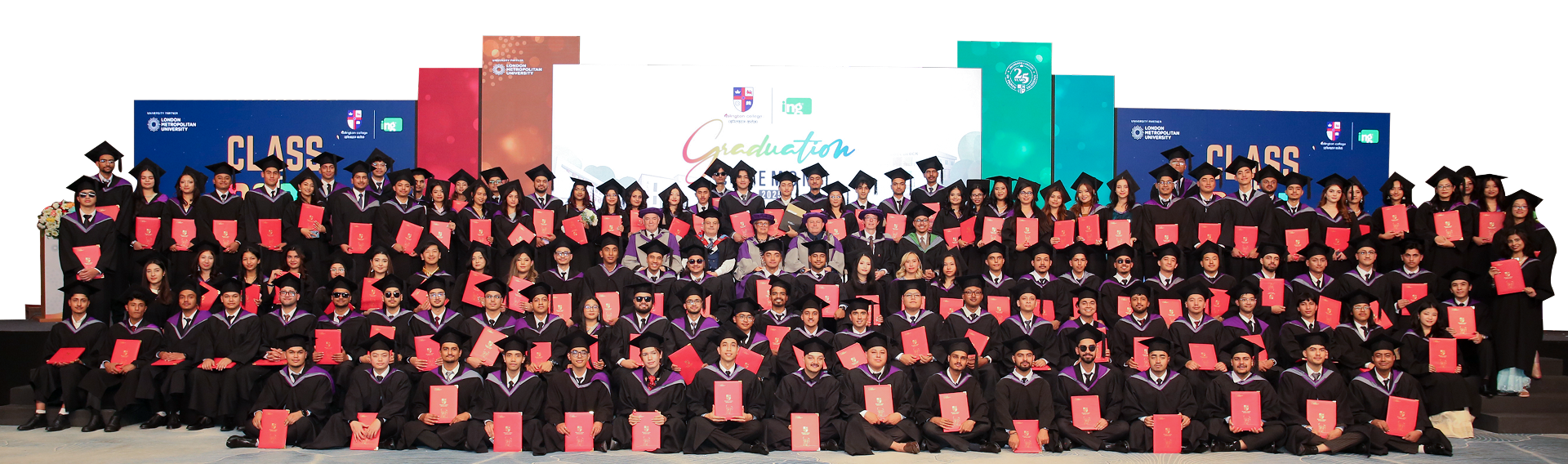
Career Advancement
With our advanced curriculum that focuses on professional and personal growth, students are better prepared to compete and advance their careers.




Autumn
(May - Oct)
/ Semester 1
Module: MN7028NI
Credits: 20
This module will enable you to develop the knowledge and skills required to think and act effectively as an inclusive leader in contemporary organisations. You will explore leadership concepts and real-world cases to critically evaluate organisational and team design for high performance.
Module: MN7029NI
Credits: 20
In the module you will learn practical methods and approaches that enable you, as a business manager or entrepreneur, to understand and use financial information for effective business decision-making. You will explore the financial decision-making process, which requires you to understand key financial management issues, performance indicators, and methodologies to critically analyse accounting and financial information. You will develop strong financial literacy, which is essential for success in business.

Spring
(Nov - Feb)
/ Semester 2
Module: MN7908NI
Credits: 10
The module explores project management practices and frameworks used in the US and Europe, including PMBOK, APMBOK, PRINCE2, and Agile/DSDM, with a focus on comparing their approaches and principles. Students develop practical skills in planning, managing, monitoring, and closing projects, particularly predictive projects such as construction, while also learning how Agile methods can be applied to projects where requirements and solutions evolve. The module also covers project management software, project categorisation, risk management, stakeholder communication and engagement, and relevant theories that view projects as temporary social organisations, enabling students to apply both traditional and adaptive approaches to effective project delivery.
Module: MN7983NI
Credits: 10
This module develops students’ ability to become responsible and evidence-informed management practitioners by understanding the role of research in effective management practice. Students explore business research methods, research philosophy, and research-informed decision-making, while critically analysing recent research and connecting theory, evidence, and real-world business contexts. The module also enables students to develop and communicate a research proposal, strengthening their analytical, research, decision-making, and professional management skills.
Module: MN7002NI
Credits: 20
The module explores business strategy and strategic decision-making, focusing on how organisations define their purpose, develop strategies, choose markets, position themselves, and create sustainable business models in a changing global environment. Students learn to analyse technological, competitive, economic, and market trends, evaluate resources and capabilities as sources of competitive advantage, and consider the roles of stakeholders, corporate governance, ethics, and corporate responsibility. Through a global business simulation, students also develop practical decision-making skills by managing uncertainty, limited information, and competitive pressures in a simulated marketplace.
Autumn
(May - Oct)
/ Semester 3
Module: FE7054NI
Credits: 20
The focus of the module is on international trade and economic theory. The topics that will be covered in the module include the benefits and reasons for international trade, patterns of international trade, reasons for protectionism, trade barriers, welfare effects of international economic policies, forms of regional economic integration, balance of payments, and determinants of exchange rates. The module will draw on the current research and empirical studies, and examine theoretical and contemporary policy issues and current debates in the international economy. It will also consider the issues and controversies that surround these activities, and illustrate the links between the theoretical concepts and practical realities.
Module: FE7066NI
Credits: 20
The module develops students’ ability to understand, manage, and analyse data in a global business context, covering data handling, mathematical and statistical foundations, data presentation, and analysis. Students learn to formulate and interpret econometric models, critically analyse global business issues, and apply both theoretical and practical approaches to data analysis. The module also provides hands-on experience with SPSS, EViews, and NVivo, strengthening students’ analytical, research, and data-driven decision-making skills.
Spring
(Nov - Feb)
/ Semester 4
Module: FE7P64NI
Credits: 20
Choose One
The module provides students with the opportunity to undertake an independent 10,000-word postgraduate dissertation based on a research question relevant to their chosen programme. Students critically investigate a specific topic, applying appropriate research methods, data collection, and analysis techniques to examine theory, policy, and practice. The dissertation aims to develop students’ research, analytical, critical reflection, and problem-solving skills, enabling them to make informed recommendations, contribute to existing knowledge, and explore an area of personal academic or professional interest under the guidance of an allocated research supervisor.
Module: MN7W01NI
Credits: 20
Choose One
The module provides you with the opportunity to showcase your professional skills in the execution of business-related tasks and experiential learning in the form of a work placement. When executing business tasks, successful practitioners are able to critically evaluate organisational matters and apply their knowledge to contribute strategies, ideas, recommendations and solutions that add value to their organisation. Furthermore, successful practitioners actively develop and shape their own behaviour, capabilities and identity. By critically reflecting on their experiences in work, they are able to develop their own capabilities and skills, and have the ability to understand how they personally add value to an organisation. It is the development and application of these capabilities in a professional context that is explored in this module.
Module: MN7P13NI
Credits: 20
Choose One
This module provides students with the opportunity to work on specific management and business issues that organisations are facing. Utilising their problem-solving skills and competences of handling and managing business challenges. Starting from problem identification and concluding with solution related recommendations, thus encouraging research into real world business and management issues impacting organisations. Building Business Insights brings together the learning processes from the whole MBA programme. It encourages the synthesis of knowledge, theories and skills developed in the modules during the previous terms in order to provide realistic solutions to contemporary business and management challenges.
This MBA course specialises in international business management which offers a global perspective, cross-cultural competence, strategic decision-making skills, expertise in international marketing and finance, knowledge of global supply chain management trade regulations, experiential learning opportunities, networking opportunities, and prepares students for leadership roles in the global business arena.
In the fourth semester, students have the opportunity to select from three distinct options namely:
Gain a deeper understanding of real-world management and business challenges.
Analyse organisational challenges, apply knowledge, and provide valuable strategies, plans, ideas, suggestions, and solutions to develop new ventures.
Investigate a specific research question or area of interest in-depth and produce a substantial piece of scholarly work.
The aim of this course is to help you understand global business environments and to enhance your career prospects in international leadership roles.
A complete bachelor’s degree with a minimum of 2.2 CGPA or equivalent.
Students may complete 2 years of work experience during their studies.
Students should have completed their higher secondary and previous higher education (e.g. bachelor’s degree) where the medium of instruction and assessment is in English.
With our advanced curriculum that focuses on professional and personal growth, students are better prepared to compete and advance their careers.
With our expansive alumni network, international degree, and valuable experience, students can stay competitive and pursue opportunities with leading employers worldwide.
With our partnership with London Metropolitan University and our teaching methods, students stand a higher chance of securing better job opportunities.

Islington Holi is an unforgettable experience, filled with colour, music, and most importantly, camaraderie.

Setting the mood with the customary Christmas garnishing, the students and staff both engage in the moment

A proud celebration marking the academic journey and achievements of our graduates, as they step into the next chapter of their lives with hope and honor

Islington Hackathon is a tech marathon where bright minds team up to solve real-world problems.

Dashain Mela at Islington College celebrates Nepal’s biggest festival with traditional games, food stalls, music, and cultural performances
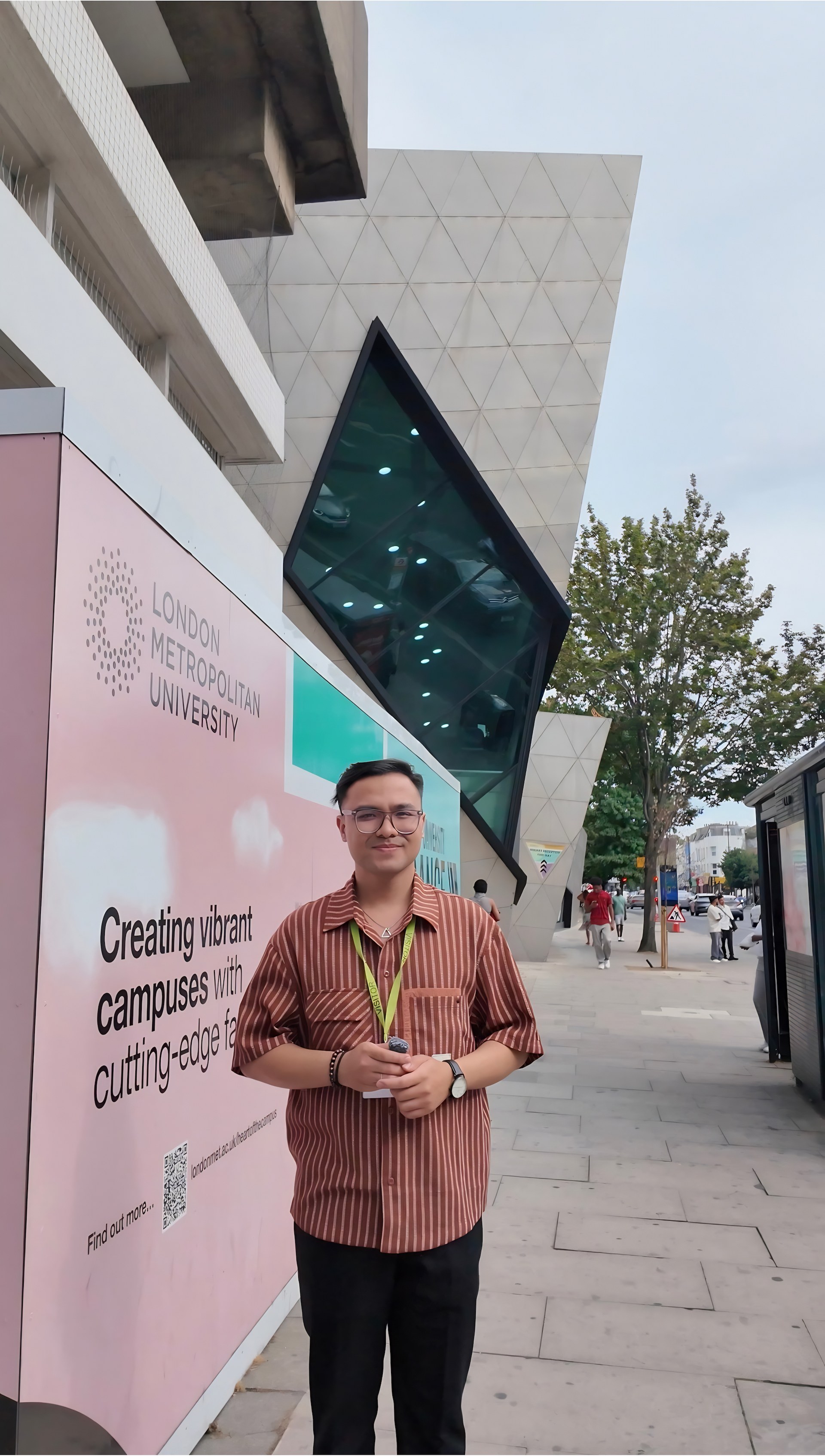

"Being selected as one of only two fully funded recipients after three interview rounds made this once-in-a-lifetime experience truly special. The workshops at London Metropolitan University delivered practical business insights, while exploring London and Torquay broadened my cultural understanding. I returned with greater confidence, broader horizons, and lasting memories. I am deeply grateful to Islington College and London Metropolitan University for this incredible opportunity. "
Prasen Man Shrestha BA(Hons) Business Administration
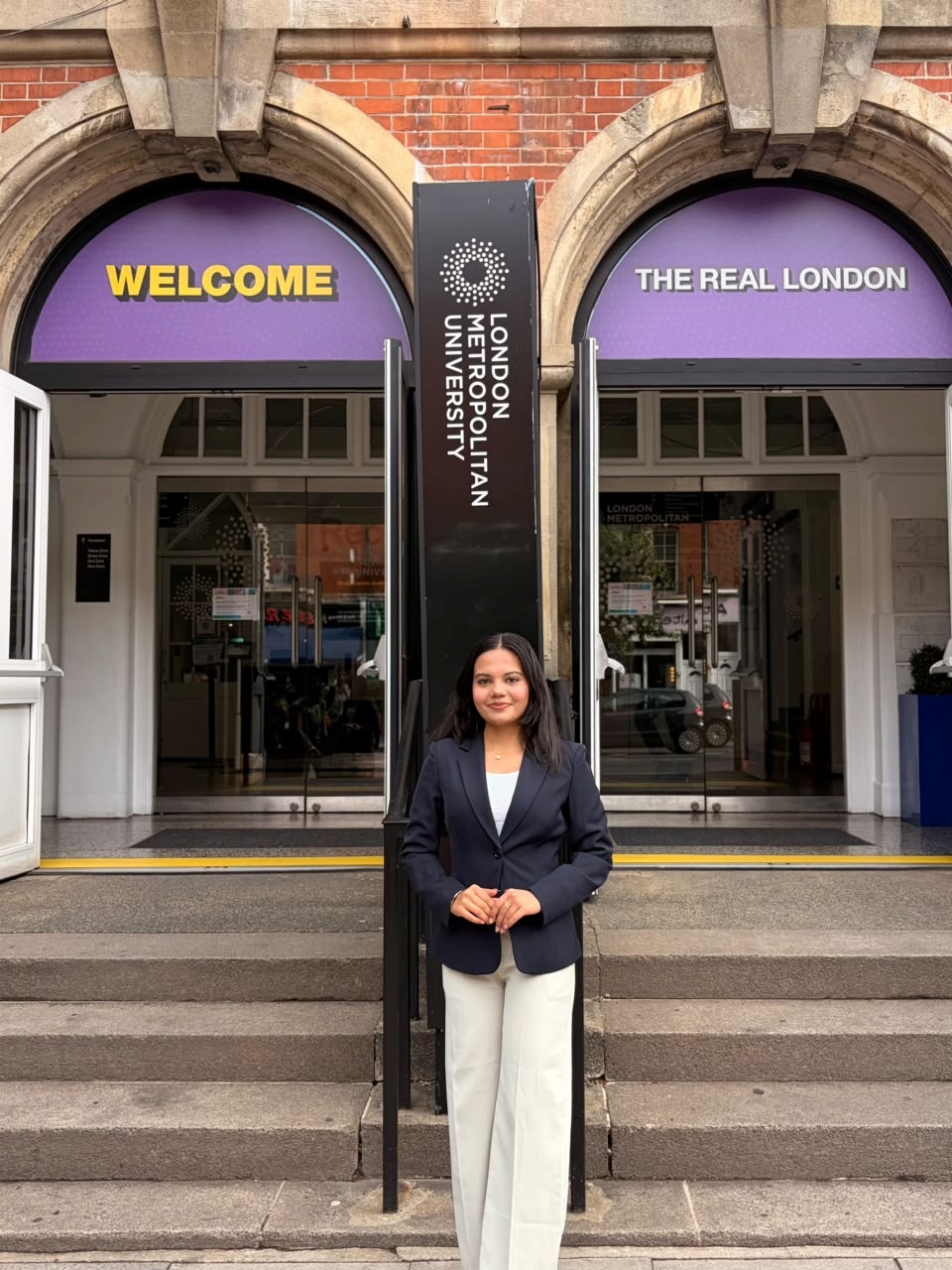
"Ten days of discoveries took our learning beyond boundaries. Exploring LMU, visiting new cities, and navigating the Underground made every moment an adventure. From the vibrant energy of London to the serene coast of Torquay, it was a transformative journey of personal growth, culture, and lifelong friendships. We returned with unforgettable memories and a little piece of London in our hearts. "
Niharika Poudel BSc (Hons) Computing
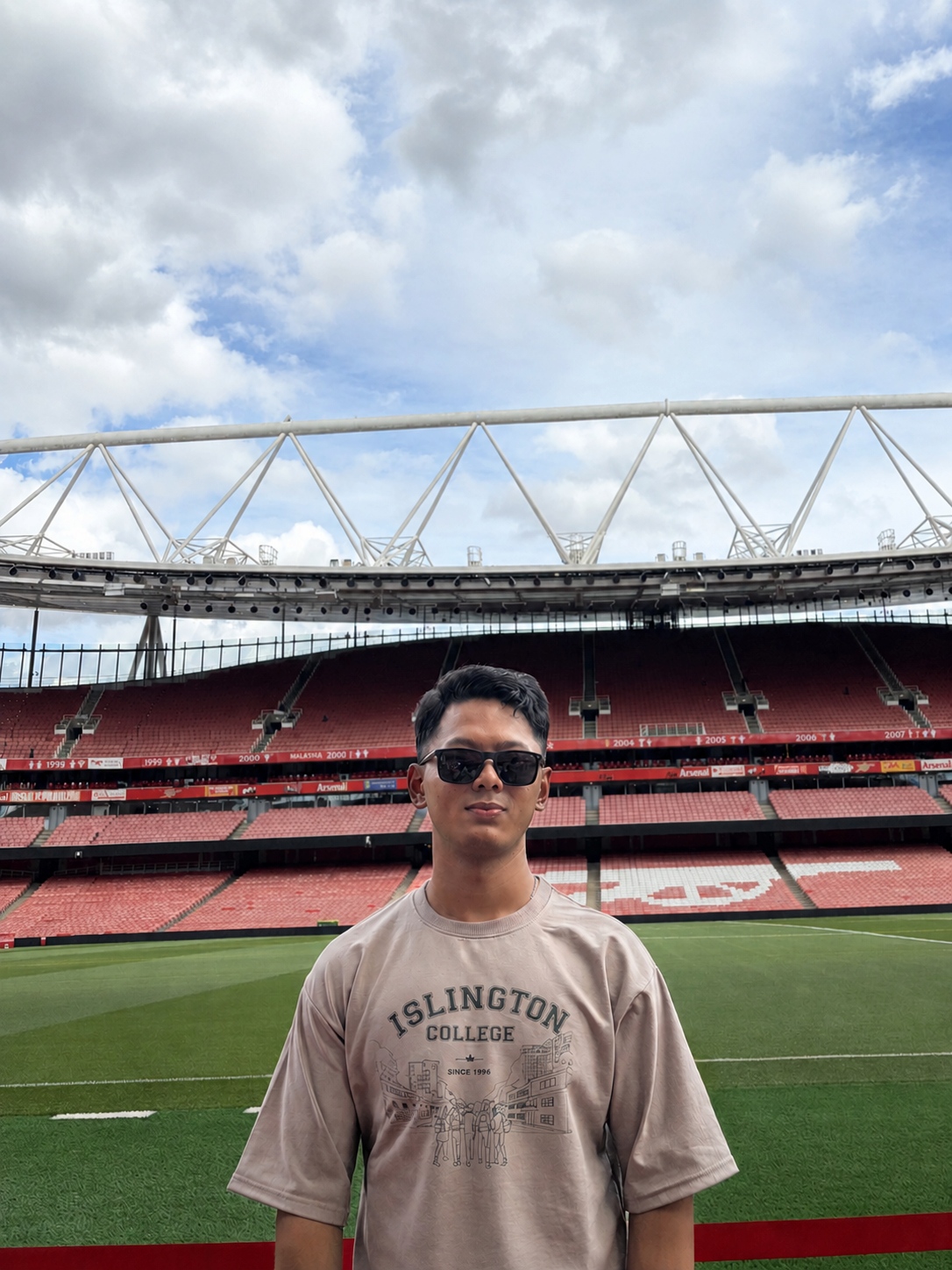
"Participating in the Real London Experience 2026 was truly unforgettable. From classes at London Metropolitan University and exploring London to Torquay’s beaches, every moment offered something new. The late-night chats, shared meals, and new friendships made it extra special. I returned home with fresh perspectives, greater confidence, and lasting memories. I am deeply grateful to Islington College and London Metropolitan University for this cherished opportunity. "
Niraj Gurung BSc (Hons) Computing

"The Real London Experience was such a great experience and I’m really glad I got to be part of it. We got to explore London, visit our home university and spend some amazing time together. One of my favourite parts was visiting Torquay, which was such a lovely experience and a nice change of scenery. It was a great mix of exploring new places, learning outside the classroom and making memories with everyone. I’m really thankful to Islington College for giving us the opportunity to experience all of this. "
Karmistha Sthapit BSc (Hons) Computing

"The Real London Experience was one of my life’s most memorable journeys. Hands-on sessions at London Metropolitan University, exploring iconic landmarks, riding the Tube, eating fish and chips, and visiting Arsenal's stadium were incredible highlights. In Torquay, the ferry ride and English Channel views were unforgettable. Above all, the laughter and shared moments made this a once-in-a-lifetime adventure. "
Nischal Paudel MBA with Specialisation in Advertisement and Marketing

"Being selected for the Real London Experience 2026 was a true honour. Experiencing international education at London Metropolitan University and seeing iconic sites like Tower Bridge and Buckingham Palace in person was deeply inspiring. London’s vibrant culture and energy exceeded all my expectations. I returned with renewed motivation and broader horizons, and I encourage every student to aim for this life-changing opportunity. "
Pranav Sharma BSc (Hons) Computing with Artificial Intelligence